
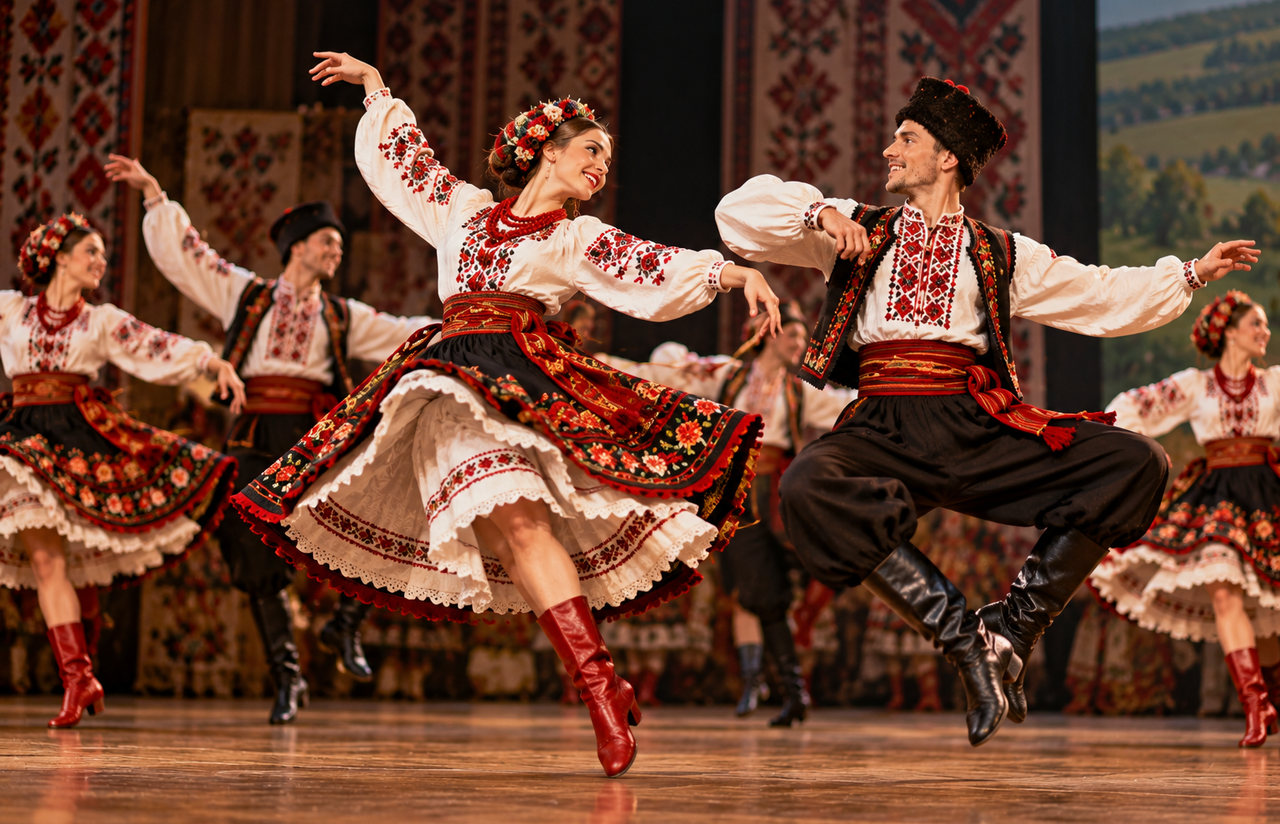
Why is there so much "military" choreography in the peaceful wedding dances of Podillia — wedges, column splits and the leader's calls?
Every restored dance begins with a journey. Ethnographers travel to a village with a video camera and a notebook, looking for the oldest residents — those who still remember evening parties, weddings and ritual games. It is in their movements, often untrained and clumsy at first sight, that the most valuable thing is preserved: the true manner of performance.
The recording is only the beginning. Months of deciphering follow: movement by movement the choreographer reconstructs the figures, checks rhythms with musicians, and looks for lost fragments in other villages. The authenticity of a dance is measured not by the age of a costume, but by fidelity to the memory of generations.
And only then does the material become a production: the group gathers, the circle is set, the melody passes from the fiddler to the orchestra. This is how a dance is born that the audience sees on stage — alive, like the spring from which it began.
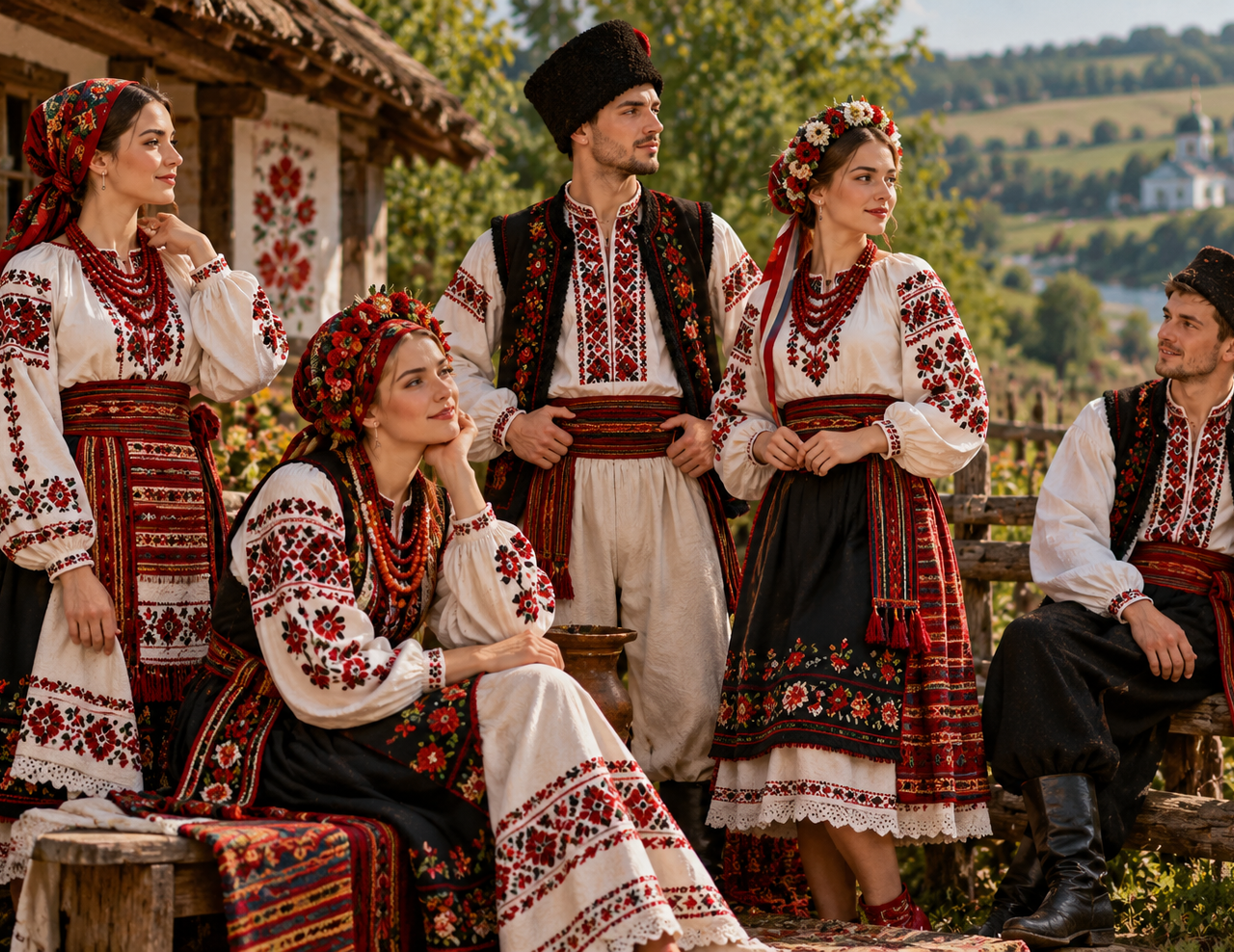
Why is there so much "military" choreography in the peaceful wedding dances of Podillia — wedges, column splits and the leader's calls?
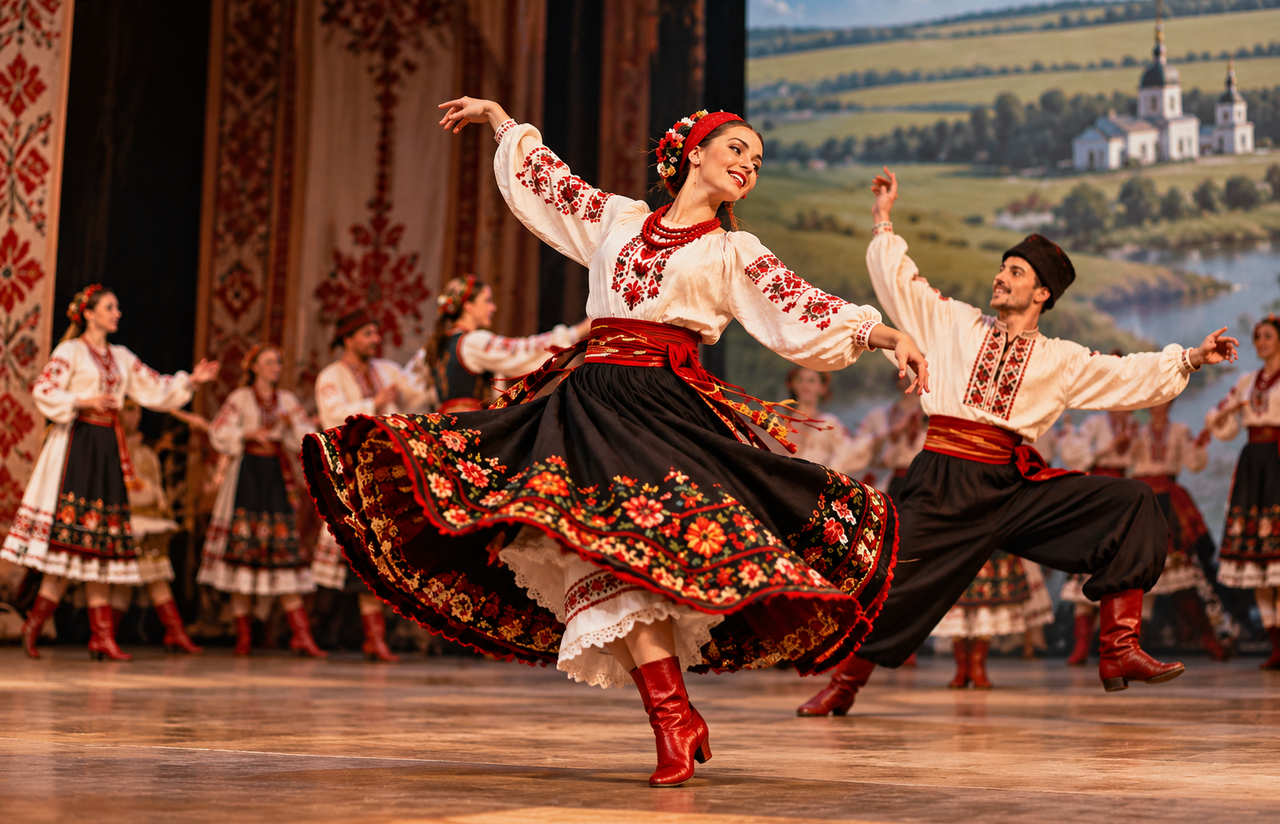
У статті розглянуто драматургічну основу подільського народного танцю як відображення духовної культури та світоглядних традицій подолян. Проаналізовано обрядові дійства зимового, весняного й літнього календарних циклів, у яких простежується генетичний код нації через пластику, ритуальні танці, хороводи та символічні дії.